Resin bound vs resin bonded driveways: what is the difference and which should you choose?
"Resin driveway" gets used as a catch-all term, but resin-bound and resin-bonded are genuinely different systems, built differently, performing differently, and priced differently — worth understanding clearly rather than assuming they're interchangeable names for the same product.
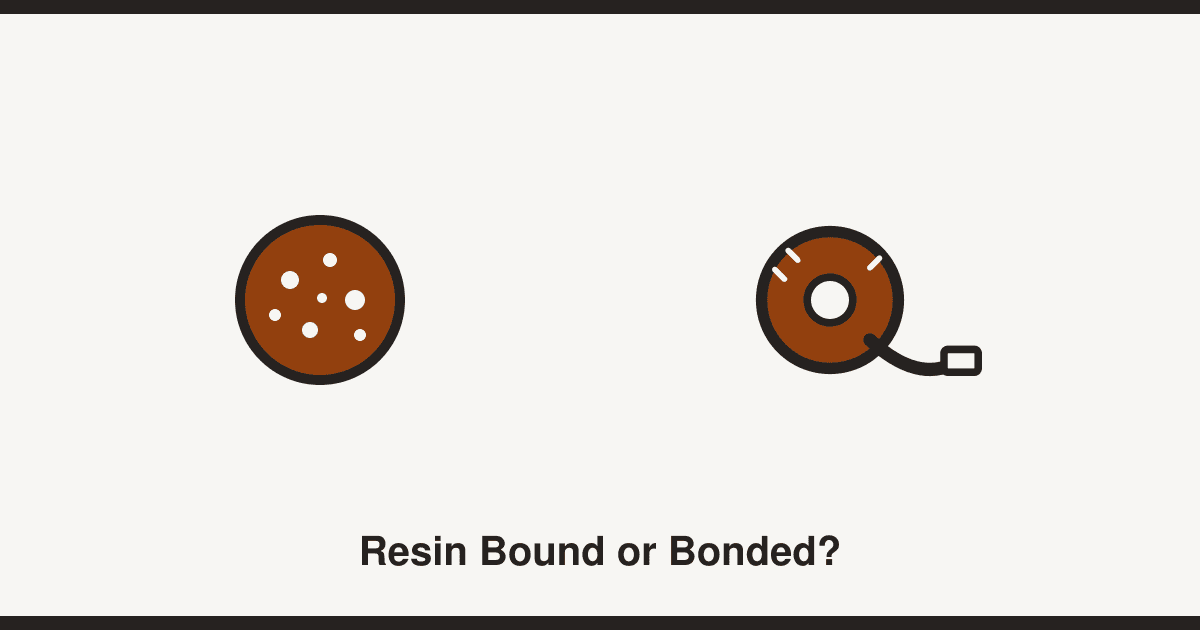
Resin-bound surfacing mixes the aggregate stones directly into the resin before it's laid, so every stone is individually coated and bound together into a single, smooth, trowel-applied layer. Because the mix itself is porous at a microscopic level even once cured, water passes straight through the surface rather than running off it — resin-bound is fully permeable, commonly cited as allowing well over 200 litres of water through per square metre per minute. That permeability matters beyond just puddle-free surfaces: it's the reason resin-bound driveways are commonly described as compliant with sustainable drainage (SuDS) principles at any size, and generally don't trigger the planning permission rules that apply to impermeable front-garden surfacing, covered in more detail elsewhere.
Resin-bonded works differently. Here, resin is spread across the prepared surface first, and loose aggregate is then scattered on top and pressed in — only the underside of each stone actually bonds to the resin layer, leaving the top surface loose and textured underfoot. Because the resin layer beneath is sealed rather than porous, resin-bonded surfaces are not permeable — rainwater runs off the top rather than draining through, which means a resin-bonded driveway is generally treated the same as tarmac or standard concrete for planning purposes, and can trigger the need for planning permission on a front garden over 5m² unless the run-off is directed to a soakaway or permeable area.
Cost reflects the extra material and labour precision that resin-bound requires. Resin-bound driveways commonly cost around £65 to £100 per m² for a standard specification, while resin-bonded, being the simpler and faster process, commonly costs less — around £40 to £60 per m². That price gap tends to persist across project sizes, so the cheaper option isn't just a small saving on a small driveway.
Lifespan is where the practical difference tends to matter most day to day. Resin-bound surfaces commonly last around 15 to 25 years, with UV-stable polyurethane resin holding its original colour far better over that time than a cheaper, non-UV-stable resin, which can visibly yellow or fade in direct sun. Resin-bonded surfaces have a shorter typical lifespan, commonly around 8 to 12 years, and because the aggregate on top is only bonded at its base rather than fully encapsulated, loose stones can work free over time — particularly under vehicle turning circles or in areas exposed to a lot of foot traffic — meaning resin-bonded driveways commonly need more ongoing maintenance to stay looking good.
Choosing between them really comes down to budget against how long the surface needs to perform well with minimal upkeep. A resin-bonded driveway suits a tighter budget or a lower-traffic area where a shorter lifespan and slightly more maintenance is an acceptable trade-off. A resin-bound driveway suits anyone wanting a smoother, more durable, genuinely low-maintenance surface, better drainage credentials, and is willing to pay somewhat more upfront for a system that's built to last considerably longer.
Frequently asked questions
Resin-bound mixes aggregate into the resin before laying, creating a smooth, fully permeable surface; resin-bonded spreads resin first and scatters loose aggregate on top, creating a textured but non-porous surface where water runs off rather than draining through.
Resin-bonded is generally cheaper, commonly costing around £40-£60 per m², compared with around £65-£100 per m² for resin-bound, reflecting the simpler, faster application process.
Resin-bound commonly lasts around 15-25 years, noticeably longer than resin-bonded, which commonly lasts around 8-12 years and tends to need more maintenance as loose aggregate can work free over time.
A permeable resin-bound driveway generally doesn't trigger planning permission requirements at any size, while a non-porous resin-bonded driveway is treated like tarmac or concrete and can need permission on a front garden over 5m² unless drainage is directed to a soakaway or permeable area.