Driveway Gates: 2026 UK Costs for Wooden, Metal and Electric — and What Automation Really Adds
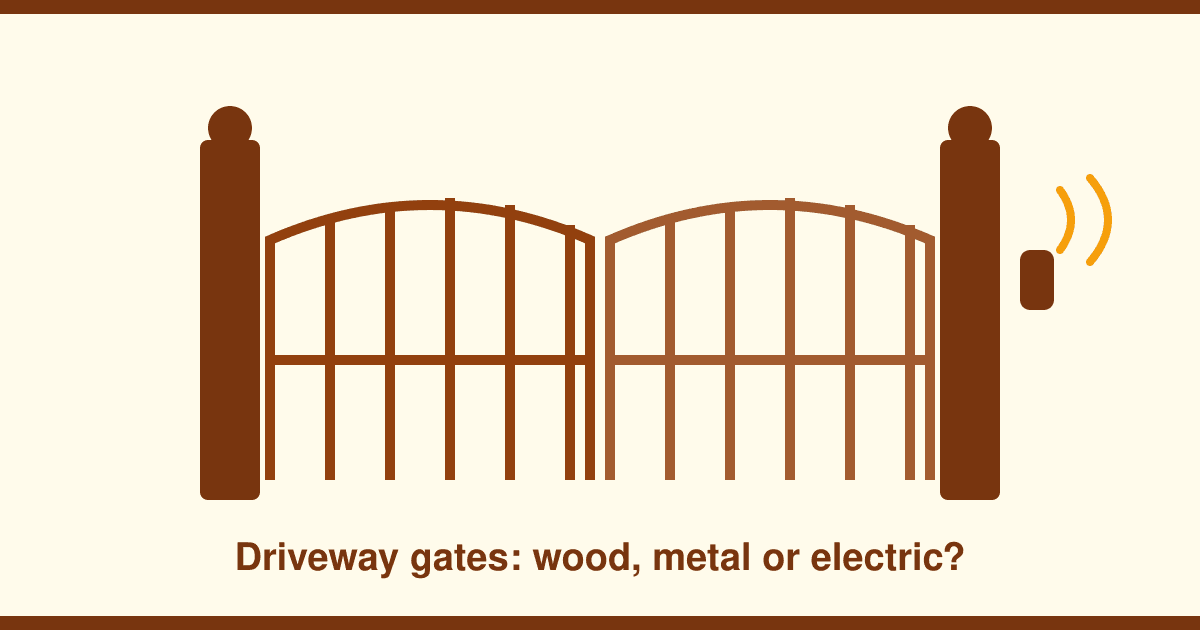
Driveway gates are one of those upgrades bought half for security and half for how the house looks from the street — and the budget can land anywhere from a weekend-project sum to small-car money. The gap is explained by three choices: material, size, and whether the gates open themselves. Here's what each choice costs in 2026.
In short: Manual gates run £700–£2,500 installed for most driveways — from £350–£650 for a small metal pair to £1,000–£2,500+ for large spans. Automation transforms the budget: electric systems average around £5,000, ranging from £3,000–£6,000 for basic swing setups to £5,000–£10,000 for large double swing or sliding systems.
Gate prices by material and size
| Gate type | Typical cost (pair, supply) |
|---|---|
| Softwood timber (pressure-treated) | £400 – £800 |
| Metal, small (up to 2.5m wide) | £350 – £650 |
| Metal, standard (3 – 4m wide) | £600 – £1,200 |
| Metal, large (4m+, 2m+ high) | £1,000 – £2,500+ |
| Aluminium (4m opening, swing or sliding) | £1,800 – £3,500 |
Add installation labour at £25–£60 per hour — straightforward hanging on existing piers is a day's work; new posts, groundworks and making good take longer. Timber is the budget-friendly classic but needs re-treating; steel wants an occasional rust check; aluminium costs more upfront and then quietly outlasts both.
What electric gates really cost
| Electric system | Typical installed cost |
|---|---|
| Basic swing gate automation | £3,000 – £6,000 |
| Double swing electric gates | £5,000 – £10,000 |
| Sliding gate systems | £5,000 – £8,000 |
| Electric wooden gates | from £2,500+ |
The running cost is the pleasant surprise: most homeowners spend under £15 a year on electricity. The real ongoing cost is an annual service — motors, hinges and safety devices need checking like any machine.
Swing or sliding? Swing gates are cheaper and simpler but need clearance for the arc — a problem on short driveways where the car would block the gates. Sliding gates solve short-drive and sloping-drive layouts, at the price of a track and a more complex motor. If your drive falls away steeply from the road, sliding is often the only workable answer.
The safety detail that sorts installers
Automated gates are machinery under the Machinery Directive rules: a professionally installed system needs force limitation, photocells or safety edges, and a CE/UKCA-marked setup — badly installed gates have caused serious accidents, and "a motor kit bolted to old gates" is exactly how they happen. A proper installer will talk about safety devices before talking about remotes; treat that conversation as your quality filter, the same way you'd vet a driveway contractor before resurfacing.
Planning the project properly
- Measure the opening honestly — including the slope. A drive that rises or falls across the gate line changes what will physically work.
- Decide automation now, even if you fit it later: Running the power ducting while posts are being set costs pennies; digging up a finished drive later doesn't. The same logic applies if you're planning a new driveway surface — do the groundworks in one go, and check the dropped kerb situation while you're at it.
- Check the boundary and opening direction: Gates must open into your property, not over the pavement — and shared access drives need the neighbour conversation before the concrete lorry arrives.
- Think about the gaps: Pet owners and parents of small children should specify bar spacing and ground clearance explicitly — retrofitting mesh to a £2,000 gate is nobody's favourite job.
Security reality check: Gates deter opportunists and stop vehicles, but a determined intruder climbs. Pair gates with lighting and a camera for the full effect — the gate is the statement, the layers do the work.
The bottom line
Budget £700–£2,500 for good manual gates installed, and £3,000–£10,000 if they're opening themselves — with sliding systems the answer for short or sloping drives. Get the safety-device conversation in writing, and duct for power even if automation waits a year. Find vetted driveway and gate installers near you here.
Frequently asked questions
Manual gates typically cost £700–£2,500 fitted: a small metal pair runs £350–£650, standard 3–4m pairs £600–£1,200, large spans £1,000–£2,500+ and aluminium £1,800–£3,500 supply-only. Timber softwood pairs cost £400–£800 plus fitting, with labour at £25–£60 per hour.
Automated systems average around £5,000 installed: basic swing automation £3,000–£6,000, double swing gates £5,000–£10,000 and sliding systems £5,000–£8,000. Running costs are minimal — typically under £15 a year in electricity — plus an annual service.
Swing gates are cheaper and simpler but need room for the opening arc — a problem on short driveways. Sliding gates suit short or sloping drives and wide openings, at the cost of a track and a more complex motor. If your drive slopes sharply from the road, sliding is usually the practical answer.
Yes — automated gates are machinery and must have force limitation and safety devices such as photocells or safety edges, properly CE/UKCA-compliant. A professional installer discusses these before remotes and keypads; a motor kit bolted to old gates without safety devices is a genuine hazard and a red flag.